

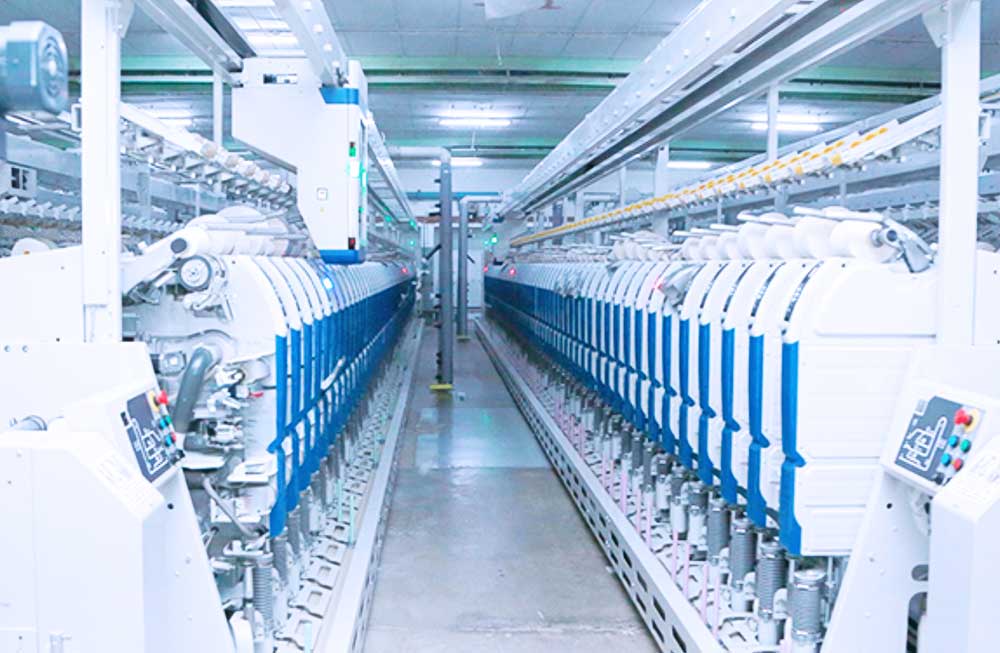
KPR Mills has approved a INR 1,225-crore investment programme spanning seven projects in Odisha and Tamil Nadu, aimed at deepening its vertically integrated presence across spinning, knitting, processing and garmenting. The board cleared the plan on 10 August 2026, and the company expects the projects to add close to INR 2,000 crore in annual turnover once operations stabilize. The entire outlay will be met through internal accruals, with no external borrowing involved.
The programme is split between three new facilities and four modernization-cum-expansion projects at existing sites, a mix that points to KPR pursuing capacity growth and operational upgrades in parallel rather than prioritizing one over the other.
Odisha enters the picture
The centerpiece of the plan is a INR 450-crore greenfield garment factory in Odisha, KPR’s first major manufacturing push outside Tamil Nadu. Set to come online in the first quarter of FY2027-28, the plant is designed for an annual output of 45 million garments. For a company whose production footprint has stayed largely concentrated in Tamil Nadu, the move into Odisha marks a deliberate step toward geographic diversification, a factor increasingly weighed by global apparel buyers when evaluating sourcing partners.
A second garmenting investment, smaller in scale but closer to home, will bring a INR 75-crore sweater manufacturing unit to Karumathampatti in Coimbatore. The facility, expected to be ready by the fourth quarter of FY2026-27, will add 2.5 million garments a year. Combined, the two facilities lift KPR’s garment capacity by 47.5 million pieces annually.
Filling the gap in processing
KPR is also placing INR 250 crore into a new fabric processing facility at Perundurai, Coimbatore, with capacity for 10,000 MT a year, due for completion in the second quarter of FY2027-28. It adds to the company’s existing processing infrastructure of 25,000 MT annually plus a 15,000 MT printing division, tightening the link between fabric output and downstream garment manufacturing.
Upgrading the Coimbatore core
The remaining INR 450 crore is going toward modernizing facilities the company already operates in Coimbatore. The Arasur knitted fabric unit will receive INR 90 crore to lift capacity to 15,000 MT per annum, while INR 100 crore is earmarked for the Neelambur facility, taking it to 20,000 MT. Spinning at Karumathampatti gets the largest share of this bucket: INR 175 crore for one mill and INR 85 crore for another spinning mill unit, with both projects due between the third and fourth quarters of FY2026-27.
Where this fits in KPR’s broader model
KPR currently runs 15 technology-based manufacturing units, with existing annual capacity of roughly 100,000 MT of cotton yarn, 10,500 MT of viscose vortex yarn, 40,000 MT of fabric and 204 million knitted garments, serving buyers in more than 65 countries as well as over 1,500 customers in the Tirupur market. The company also draws on a sizeable captive renewable energy base – 61.92 MW of wind, 40 MW of solar and 90 MW of co-generation capacity – that supports its manufacturing operations.
Against that backdrop, the latest round of investment reads less like a one-off expansion and more like a continuation of KPR’s long-running strategy: build out garmenting and processing capacity to capture more value downstream, while continuing to reinforce the spinning and knitting base that has historically anchored the business. Funding it entirely through internal accruals also signals that the company is choosing to expand within its own financial means rather than lean on debt to accelerate the timeline.
With the Odisha facility in particular, KPR is betting that scale, integration and geographic spread – rather than any single new product line – will be what keeps it competitive as global apparel buyers continue to consolidate sourcing around fewer, larger, more reliable manufacturing partners.