

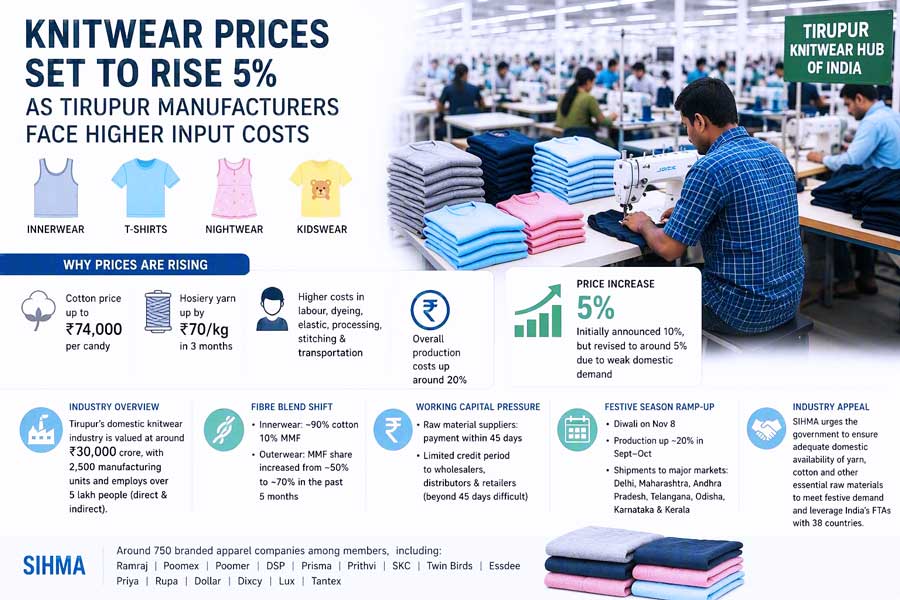
Prices of innerwear, nightwear, T-shirts and kidswear are expected to increase by around 5% across India following a revision announced by the South India Hosiery Manufacturers Association (SIHMA), as manufacturers contend with rising raw-material, labor and processing costs.
Tirupur’s domestic knitwear industry, valued at around Rs 30,000 crore, comprises approximately 2,500 manufacturing units and provides direct and indirect employment to more than five lakh people. The industry manufactures a broad range of products, including innerwear, T-shirts, track pants, nightwear and kidswear.
SIHMA vice president S Balachandar said overall production costs have increased by around 20%, driven by higher cotton and yarn prices as well as increases in labor, dyeing, elastic, processing, stitching and transportation costs. Cotton prices have reached around Rs 74,000 per candy, while hosiery yarn prices have increased by up to Rs 70 per kg over the past three months.
The association initially proposed a 10% price increase, but manufacturers opted for a lower increase of around 5% amid weak domestic demand. The reduced revision reflects concerns that a sharper increase could further affect consumer demand and market offtake.
SIHMA has around 750 branded apparel companies among its members, including Ramraj, Poomex, Poomer, DSP, Prisma, Prithvi, SKC, Twin Birds, Essdee, Priya, Rupa, Dollar, Dixcy, Lux and Tantex.
The changing availability and cost of raw materials are also influencing fiber blends. Balachandar said domestic-market innerwear is generally produced using around 90% cotton and 10% man-made fiber (MMF). In outerwear, however, manufacturers have increased the MMF share from around 50% to nearly 70% over the past five months due to reduced cotton availability.
The industry is also facing tighter working-capital conditions. Raw-material suppliers are seeking payment within 45 days, while garment manufacturers are finding it difficult to offer wholesalers, distributors and retailers credit periods longer than 45 days, putting additional pressure on liquidity across the supply chain.
Despite intermittent production slowdowns caused by the surge in yarn prices, activity has picked up ahead of the festive season. Cotton, yarn and fabric manufacturer Angu Ananda Prasanna said garment manufacturers have advanced their production schedules this year to prepare for Diwali, which falls on 8 November 2026, with festival consignments needing to reach major markets by the end of September.
Production in Tirupur typically increases by around 20% during September and October to meet festive demand, with supplies directed to markets including Delhi, Maharashtra, Andhra Pradesh, Telangana, Odisha, Karnataka and Kerala.
According to Prasanna, production that would normally begin in the first or second week of September started around one-and-a-half months earlier this year, as manufacturers have been procuring yarn and starting garment production ahead of schedule based on the previous year’s sales, while also seeking to mitigate potential labor shortages, weekly yarn price increases and raw-material availability concerns.
Balachandar said manufacturers remain concerned about their ability to meet festive orders, and attributed part of the yarn price pressure to exports. SIHMA has urged the Union government to ensure adequate domestic availability of yarn, cotton and other essential raw materials, saying uninterrupted access to raw materials will be critical for manufacturers to meet festive-season demand and strengthen the industry’s ability to take advantage of India’s free trade agreements with 38 countries.