
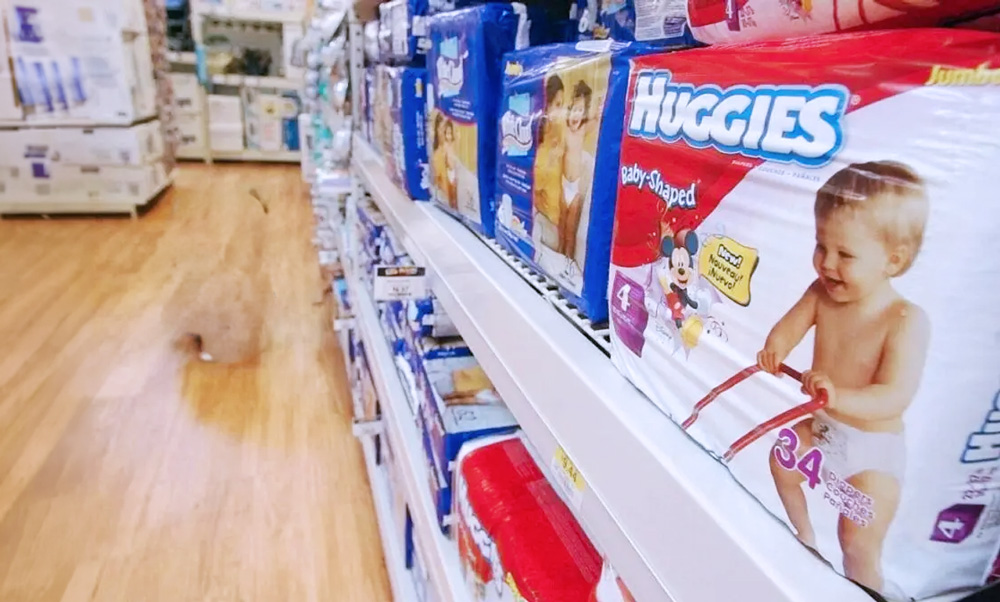
Kimberly-Clark lowered its full-year sales and profit guidance, pointing to an ongoing controversy in China over the safety of its Huggies diapers as a drag on second-quarter results that it expects to keep weighing on the business.
The setback stems from claims that surfaced on Chinese social media in June, shortly before the country’s major ‛618’ shopping event, alleging that Huggies products – along with diapers from domestic brands Babycare and Bibabebe – contained formamide, a chemical that can cause skin, eye and respiratory irritation. Kimberly-Clark has pushed back on the allegations, pointing to testing conducted by an independent, government-certified lab that it says clears its products. China’s market regulator has opened a review of the matter but hasn’t named any specific brand or company, and no findings have been released so far.
Speaking to the situation, chief executive officer Mike Hsu acknowledged that such controversies are becoming more common and that shoppers are increasingly quick to pick up on them. “While we are cautiously optimistic in some areas, I think these incidents have been occurring with greater frequency, and consumers are pretty smart and getting savvy,” he said, adding that resolving the fallout would take time: “We are also realistic that it’s going to take a little time to kind of work through this.”
The company now projects that 2026 organic sales will grow roughly 100 basis points slower than the average pace of its markets and product categories – a reversal from its prior guidance of matching that pace. Those categories have expanded around 2% over the past year. Adjusted earnings per share, meanwhile, are now expected to rise at a high-single-digit clip on a constant-currency basis, a marked step down from the double-digit growth previously forecast. Roughly USD 150 million of that revised outlook is attributed to elevated oil prices, at the milder end of the range Kimberly-Clark had flagged back in April 2026.
Chief operating officer Russ Torres characterized the China episode as a one-off external shock rather than a structural problem, but one with real near-term costs: he estimated it would shave three to four percentage points off organic growth in the company’s International Personal Care segment and 10 to 12 percentage points off that segment’s operating profit growth this year, as Kimberly-Clark ramps up spending to protect its market position.
The China troubles have overshadowed otherwise steady progress on the company’s cost-cutting and broader business transformation, adding a fresh complication at a time when Kimberly-Clark – like much of the consumer goods sector – is already navigating a cautious, budget-conscious shopper base. Brian Mulberry, chief market strategist at Zacks Investment Management, warned the damage could linger: “A prolonged reputational issue could delay market share recovery even after regulators close their investigation.”
The forecast cut comes shortly after Kimberly-Clark closed a deal selling a 51% stake in its international tissue operations to Suzano, forming the USD 3.4 billion Arbex venture aimed at competing more directly with Procter & Gamble and Essity. It also arrives as the company works toward finalizing its roughly USD 40 billion purchase of Kenvue, which it expects to complete by year-end.