
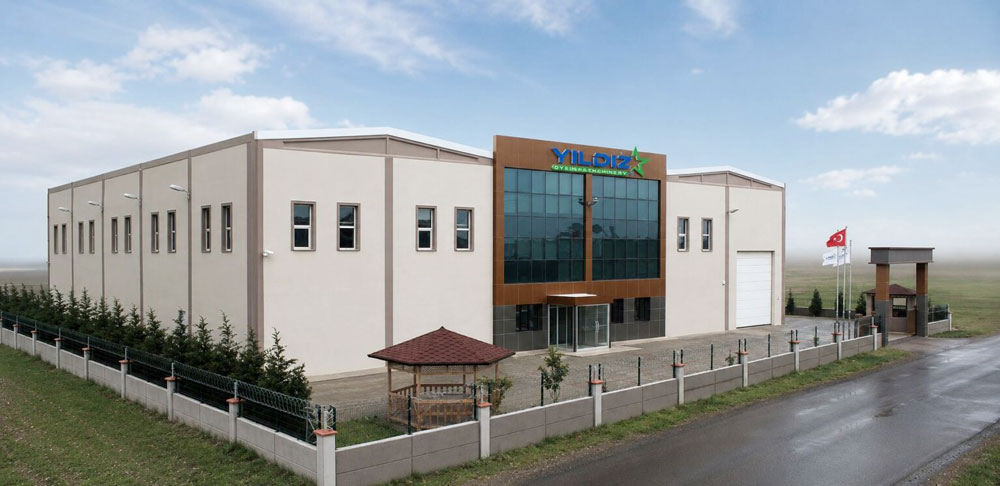
YILDIZ has spent more than two decades establishing itself as a specialist in advanced fabric dyeing technologies, gaining recognition across global textile markets for its focus on innovation, sustainability, and dyeing quality. Under the leadership of Birkan Yildizoglu, director and owner of YILDIZ, the company has evolved by combining textile know-how with customer-centric engineering solutions.
At the upcoming ITM Istanbul 2026, YILDIZ will once again showcase its SEPIIDA dyeing technology, a solution designed to process a wide range of fabrics, from low GSM 100% polyester materials to high GSM cotton lycra and other cotton-blended fabrics, within the same machine platform – it can function as a long tube or a soft flow dyeing machine within a single unit. In this interaction, Yildizoglu shared insights into the company’s journey, technological strengths, sustainability initiatives, and expansion plans in emerging markets such as India and Sri Lanka.
A journey built on specialization and textile expertise
YILDIZ’s growth is rooted in specialization. Since its establishment in 1998, the company has focused exclusively on fabric dyeing machines, a strategy that, according to the company, has enabled it to develop expertise and technological depth in this niche segment.
According to Yildizoglu, the company’s textile industry experience spans more than 45 years, providing a technical foundation from the outset. Over the years, YILDIZ has built a reputation for delivering dyeing solutions tailored to evolving market requirements.
One of the milestones in the company’s journey came in 2019 with the launch of the SEPIIDA model, a dyeing concept developed with an emphasis on dyeing quality, sustainability, low water and energy consumption, and the flexibility to process multiple fabric varieties within a single system.
SEPIIDA – a benchmark in flexible fabric dyeing
At the center of YILDIZ’s product line is the SEPIIDA dyeing machine, engineered to handle a wide range of fabrics and fabric weights within the same platform.
The company states that the machine is capable of processing both 100% polyester low GSM fabrics and cotton-lycra and other blended high GSM fabrics, combining long tube and soft flow dyeing technologies. This flexibility, according to the company, is made possible through YILDIZ’s understanding of fabric behavior and dyeing processes.
The development of SEPIIDA was driven by collaboration with customers and a study of industry requirements. Since different fabrics require different dyeing approaches, YILDIZ focused on improving the machine’s flow system, geometry, circulation structure, and overall design.
Particular attention was given to polyester fabric processing, where circulation time and liquor transfer into the fabric are said to be critical factors. Through these engineering changes, the company states it has achieved dyeing performance while reducing water, energy, and chemical consumption across a range of fabric types.
Driving sustainability through automation
As sustainability and production efficiency become more important for textile manufacturers worldwide, YILDIZ has integrated automation and software technologies into its dyeing systems.
The company’s machines operate as automatic systems, in which software manages the dyeing process. Through its Smart Operator Assistance system, YILDIZ says it enables automatic reel speed adjustments based on targeted fabric circulation times, nozzle settings optimized according to fabric GSM, and automatic knot recovery during production.
The machines also incorporate dosing technologies along with automatic pH and conductivity measurements, intended to ensure stable and repeatable dyeing results.
These automation features, according to the company, reduce operator dependency and operational risks while helping manufacturers achieve dyeing quality with lower consumption of water, chemicals, and energy.
Customized solutions for diverse fabric requirements
One of YILDIZ’s differentiators, the company says, is its ability to customize dyeing solutions for a range of fabrics, including woven, knitted, low GSM, high GSM, and high-lycra blended materials, with fabrics containing lycra content as high as 32% able to be dyed in the machine.
Rather than adopting a standardized machine approach, the company adapts machine parameters according to fabric sensitivities and production requirements, including nozzle and reel structures, circulation systems, chamber designs, software parameters, and process controls.
Drawing on its understanding of fabrics and dyeing technologies, YILDIZ says it delivers solutions aimed at dyeing quality while minimizing water, chemical, and energy consumption.
Expanding presence in India and Sri Lanka
YILDIZ is also strengthening its presence in South Asia through its partnership with The Gaurs. Yildizoglu identifies India and Sri Lanka as important markets, citing the growth of the textile industry in the region and demand for sustainable, high-efficiency, and technologically advanced dyeing solutions.
The company sees opportunities in helping manufacturers reduce water, energy, and chemical consumption while improving dyeing quality and production flexibility. Through its regional partnership, YILDIZ aims to provide technical support, customer engagement, and solutions aligned with local manufacturing needs.