

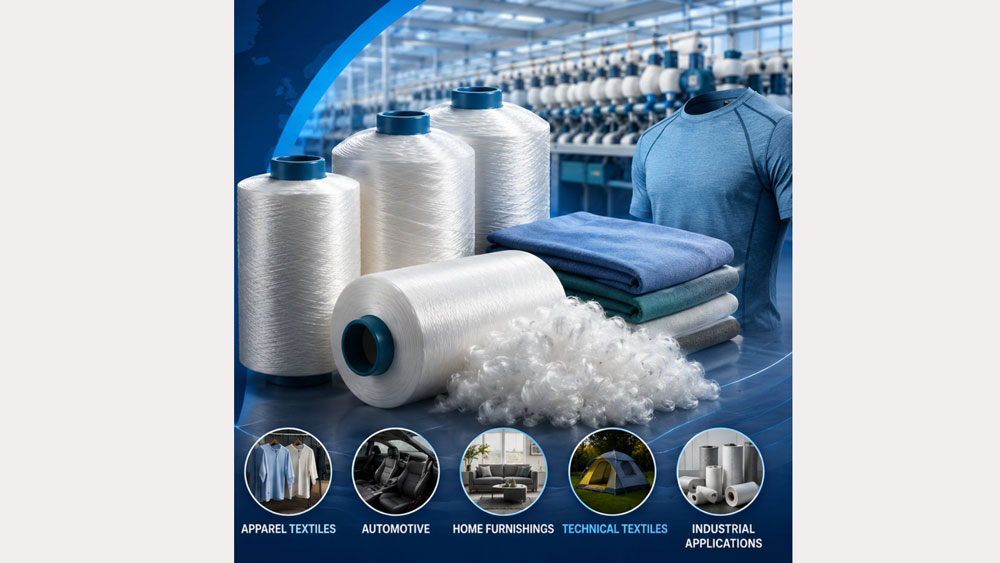
The global polyester fiber market is projected to grow from USD 140.7 billion in 2026 to USD 191.4 billion by 2033, registering a compound annual growth rate (CAGR) of 4.5% during the forecast period, according to a new study by Persistence Market Research. The market continues to see demand across the textile and apparel industries, where polyester fiber is used for its durability, affordability, wrinkle resistance, lightweight properties, and versatility across a range of applications.
Polyester fiber is among the most widely used synthetic fibers globally, serving industries ranging from fashion and home furnishings to automotive textiles and industrial applications. Consumer preference for cost-effective, durable, and easy-care fabrics continues to support market demand. Adoption of polyester in technical textiles, non-woven products, and performance apparel is also cited as a factor in the market’s expansion. Manufacturers continue to invest in production technologies and product innovations aimed at sustainability, with polyester fiber expected to remain a raw material used across multiple end-use industries.
The textile and apparel industry remains the largest contributor to polyester fiber consumption. Urbanization, changing fashion trends, rising disposable income, and demand for affordable clothing are cited as factors driving higher production volumes worldwide. Polyester’s resistance to shrinking, stretching, wrinkles, and moisture makes it a common choice for everyday garments and performance sportswear. The continued expansion of apparel manufacturing hubs, particularly across Asia, is expected to contribute to market growth during the forecast period.
Sustainability is described as one of the trends shaping the polyester fiber market. Manufacturers are investing in recycled polyester fibers produced from post-consumer plastic bottles and industrial waste. Circular economy initiatives, environmental regulations, and consumer awareness around sustainable fashion have encouraged brands to incorporate recycled polyester into their product portfolios. Technological developments in recycling processes are expected to improve product quality while reducing environmental impact.
Research and development activities are said to be leading to improvements in polyester fiber performance, with manufacturers introducing fibers with enhanced moisture management, antimicrobial properties, UV resistance, flame retardancy, and greater tensile strength.
These developments are expanding polyester fiber applications beyond conventional textiles into healthcare, automotive interiors, construction materials, filtration systems, and industrial fabrics. Manufacturing technologies are also said to be improving production efficiency while reducing operational costs.