

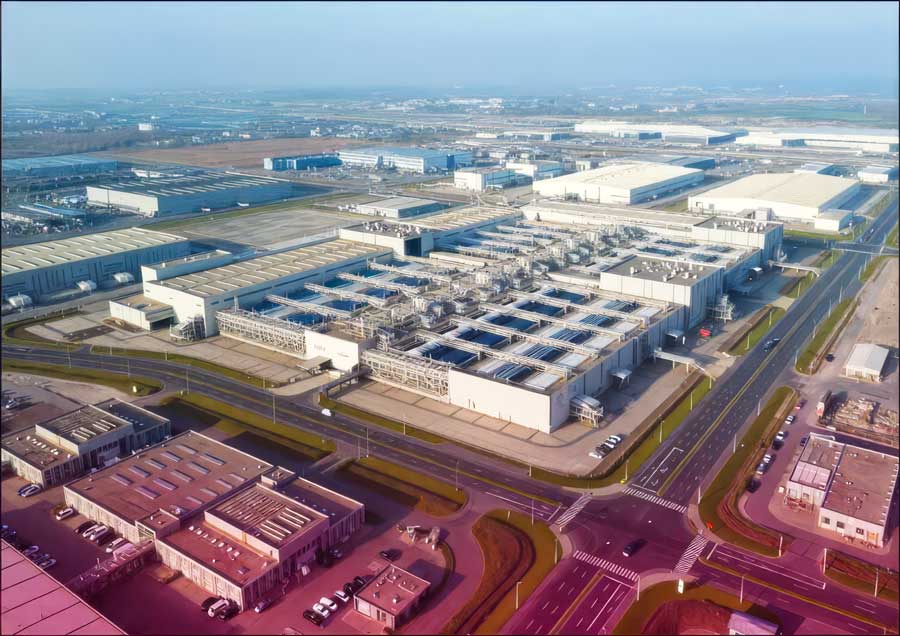
For decades, Pallavaa Group has built its business through a steady expansion of capabilities in man-made fibers (MMF), investing in technology, modernization and backward integration. Its latest decision to invest INR 1,000 crore in a new textile manufacturing facility at the PM-MITRA Textile Park in Virudhunagar, Tamil Nadu, marks a significant shift in scale and ambition.
This is not simply another capacity addition. It is a strategic move aimed at extending control across a larger portion of the textile value chain.
The planned facility will integrate spinning, weaving, knitting and processing under one manufacturing ecosystem. By bringing these operations together, Pallavaa is moving beyond its identity as a large MMF yarn and fabric producer toward a more integrated textile manufacturing model.
The significance of the investment lies in what it enables. In an industry where speed, consistency and traceability are becoming increasingly important, vertical integration offers manufacturers greater control over quality, production planning and product development. It also creates the ability to respond more quickly to evolving customer requirements while capturing value across multiple stages of production.
For Pallavaa, the project represents a notable acceleration of a journey that began nearly five decades ago. The company started as a weaving enterprise in 1977 and established its first spinning unit in 1991. Over time, it differentiated itself by focusing on viscose and other man-made fibers at a time when many South Indian textile manufacturers were primarily centered on cotton. Continuous investments in modernization and integration gradually expanded its manufacturing footprint and capabilities.
The Virudhunagar project appears to be the next logical step in that long-term strategy.
The location is equally important to understanding the investment. The PM-MITRA Textile Park has been designed to create an integrated manufacturing ecosystem through plug-and-play infrastructure, reliable power availability, worker housing and zero-liquid-discharge water treatment facilities. By reducing some of the infrastructure challenges traditionally associated with large-scale textile operations, the park is intended to attract exactly the kind of investment represented by Pallavaa’s project.
In that sense, the investment serves as an early example of how integrated textile parks can support the development of larger and more connected manufacturing clusters.
At the center of Pallavaa’s expansion strategy is a continued focus on man-made fibers and value-added products. The company has steadily built capabilities in segments that include viscose, modal, lyocell, bamboo-based fibers, cotton-MMF blends and recycled polyester blends. These categories align with growing demand for diversified fiber portfolios, blended fabrics and materials that meet evolving sustainability requirements.
Rather than competing solely through volume, the company is positioning itself in areas where product differentiation, fiber innovation and process capabilities carry greater strategic importance.
Technology also remains a defining element of that approach. Pallavaa’s substantial investment in vortex spinning has helped strengthen its position in MMF yarn manufacturing. The technology supports the company’s wider objective of building a differentiated yarn portfolio rather than focusing exclusively on output expansion. As customers increasingly seek consistent and specialized textile inputs, technological capability becomes a competitive advantage across both domestic and export markets.
The company’s existing manufacturing scale adds credibility to the latest expansion. Pallavaa already operates approximately 330 tonnes of yarn production per day, around 600,000 meters of woven fabric daily, knitting capacity of about 20-25 tones per day, nearly 200 vortex spinning machines and serves customers in more than 40 countries through eight manufacturing units in the Pallipalayam cluster. The Virudhunagar project is therefore being built on an established industrial foundation rather than representing a greenfield scaling effort by a new entrant.
Sustainability further strengthens the business rationale behind the investment. Pallavaa has articulated an ambition to become carbon-neutral by 2035 and reports that nearly 90% of its energy comes from green sources. Combined with initiatives focused on energy efficiency, waste reduction and a portfolio of sustainable fibers, the new facility’s access to zero-liquid-discharge infrastructure aligns with growing customer expectations around environmental responsibility and supply-chain transparency.
These factors are becoming increasingly important in export markets, where buyers are looking beyond price and evaluating sourcing partners on sustainability, traceability and operational resilience.
Ultimately, the INR 1,000-crore investment is best understood as a value-chain strategy rather than a capacity strategy. By integrating spinning, weaving, knitting and processing within a single ecosystem, Pallavaa is strengthening its ability to serve global customers that increasingly prefer suppliers capable of offering scale, consistency, sustainability and end-to-end manufacturing capabilities.
The broader significance lies not in the construction of another textile facility, but in how Pallavaa is repositioning itself within the textile value chain.. It is that the company is positioning itself to play a bigger role in global textile supply chains by expanding both across and up the MMF value chain. For Pallavaa, the next phase of growth appears less about producing more and more about controlling more of the journey from fiber to finished fabric.